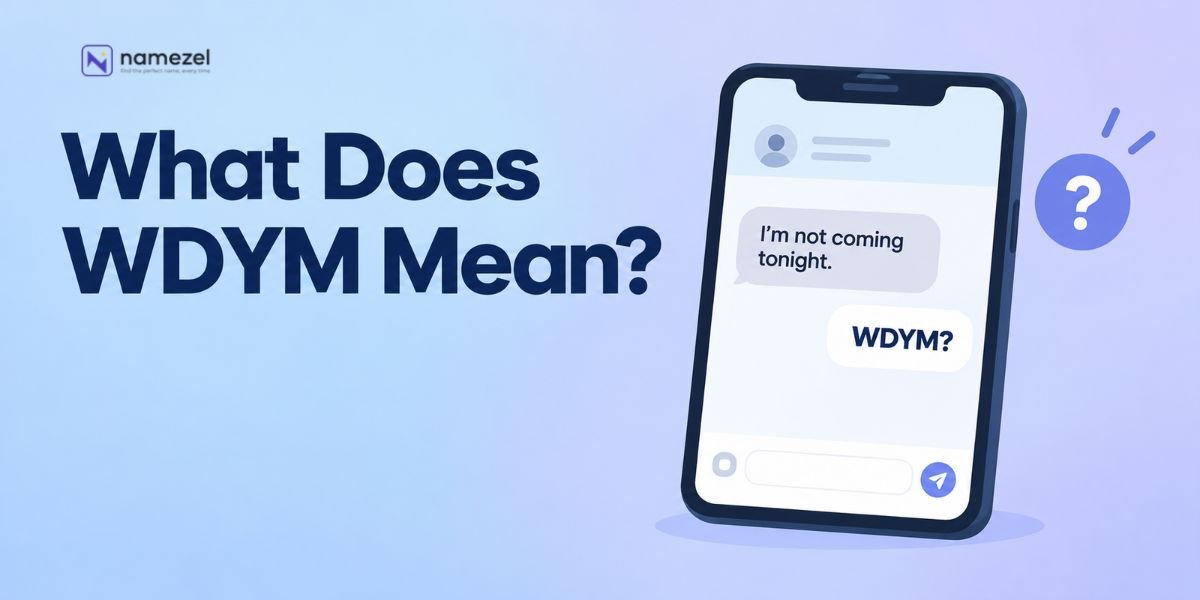
WDYM stands for “what do you mean?” It’s a quick text-message phrase people use to ask someone to explain a statement that seems unclear, surprising, or open to more than one interpretation. In most chats, it’s the same as typing “Can you explain what you meant by that?”
The abbreviation is simple, but how it lands depends on the moment. The same three letters can sound curious in one conversation and skeptical in another, so the wording around them, the punctuation, and the relationship between the two people all matter. This guide covers the full form, how WDYM works on texting apps and Snapchat, when it can come across as rude, how to reply, and how it differs from WYM and similar abbreviations.
What Does WDYM Mean?
WDYM is a request for clarification. When someone sends it, they usually didn’t follow your point, or your message could be read in more than one way. Dictionary.com describes WDYM as an informal acronym for “what do you mean?” used to ask for clarification or to ask someone to define something they said. That source is an informal summary rather than a formal dictionary entry, but it matches how the phrase is used in everyday chats.
Here’s a typical exchange:
Ava: I’m not really going to the reunion anymore.
Noor: WDYM? I thought you already RSVP’d yes.
Noor isn’t rejecting Ava’s plan. She wants to know whether the plans changed or whether she misread an earlier message.
WDYM Full Form Explained
Each letter stands for one plain English word:
- W = what
- D = do
- Y = you
- M = mean
Together, the phrase asks what the other person intended. Because the abbreviation is informal, people often type it in lowercase and skip punctuation, and that habit is part of why its tone can be hard to read. Some people also write it as “wdym” or “WDYM,” and both forms mean the same thing.
How WDYM Is Used in Text Messages
In texting, WDYM usually shows up in one of three situations:
- The message was vague. Someone said something without enough detail, and you want the specifics.
- The message was surprising. The statement doesn’t match what you expected, so you’re checking that you read it right.
- You want more information. A friend mentions a problem or opinion, and you’d like them to say more.
In each case, WDYM works as a short prompt that invites the other person to keep talking. It’s often sent while the reader is still thinking about what was said, which is why it tends to appear right after a message rather than several messages later. People who text a lot also use other short forms to keep things moving, such as the ones explained in our MYH meaning guide.
What Does WDYM Mean on Snapchat and Other Apps?
On Snapchat, WDYM means the same thing it does everywhere else: “What do you mean?” Several sources that cover Snapchat slang say the same. The abbreviation doesn’t have a separate Snapchat definition, and it isn’t tied to any specific app feature.
What changes is the setting. Snapchat messages often disappear after they’re viewed, and story replies are usually brief. A one-word WDYM can arrive with little surrounding context, so it may feel more abrupt than it would in a longer chat thread. If a message seems to come out of nowhere, a short follow-up that restates your question can help. The same logic applies to Instagram DMs, TikTok comments, and other short replies, where the original post or message may be the only context you have.
Is WDYM Rude?
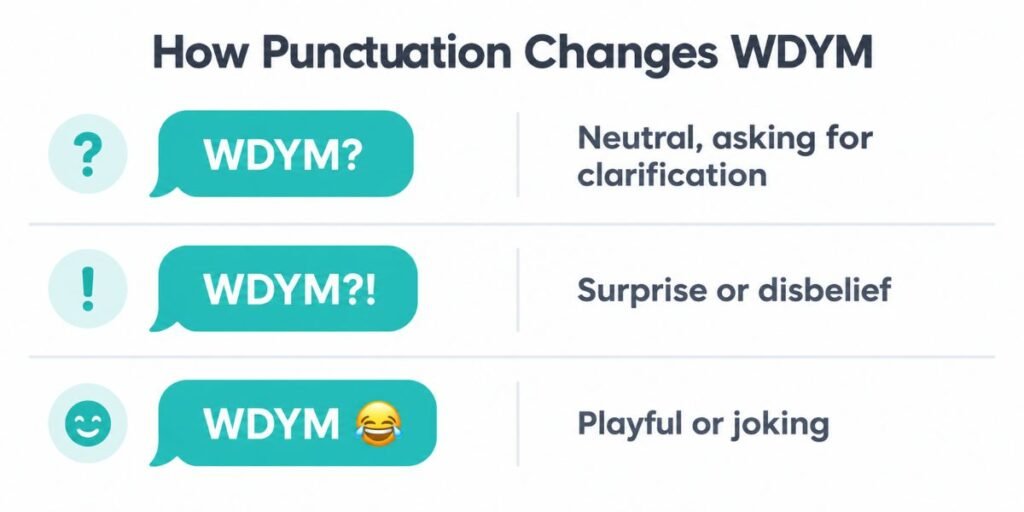
WDYM isn’t rude on its own. The abbreviation is neutral, and the surrounding message determines the tone.
Compare these two replies to the same statement:
- “Sorry, I got a bit lost. WDYM by the deadline changing?” reads as genuine confusion.
- “WDYM? Seriously?” can sound challenging, especially if the other person just made a clear point.
The difference comes from the extra words, not the abbreviation. The first reply tells the reader what confused you. The second asks for an explanation while expressing doubt, which makes it feel confrontational.
Reading the Tone: Signals Worth Checking
When you’re deciding how a WDYM was meant, a few signals usually help:
- Punctuation: A plain “wdym” with no punctuation often reads as casual. Extra question marks or an exclamation point can signal surprise or irritation.
- Emojis: A laughing or confused emoji usually softens the message. A flat or sharp reaction can make it feel more pointed.
- Capitalization: All-caps WDYM can look like emphasis, especially in a heated exchange.
- The earlier message: If the other person had already explained the topic, a WDYM may mean “I’m confused again,” not “explain from scratch.”
- Your relationship: Between close friends, a WDYM may be a joke. Between coworkers who don’t know each other well, the same message may read as blunt.
No single signal settles the question. Looking at several together gives a more reliable picture than focusing on the three letters.
WDYM as a Joke or Sarcasm
Sometimes the question is a playful move. So what does WDYM mean when a friend is joking? Usually the sender already knows the answer. A friend who teases you about eating the last slice of cake might get a “WDYM 😂” back, and both people know the reply is part of the joke. In these cases, the sender usually understands the statement perfectly well and is just stretching the moment.
Sarcasm works the same way. If someone says “Wow, you’re never late,” and you reply “WDYM? I’m always on time 😂”, the message is clearly a joke. The same words in a tense conversation would sound much more pointed. Because the difference depends on the shared history between the two people, WDYM used as humor works best with friends who already read each other’s tone well.
WDYM From a Boy or a Girl
WDYM has the same meaning no matter who sends it. A message from a boy, a girl, or anyone else still asks for clarification. I couldn’t find reliable sources that say the abbreviation changes meaning based on the sender’s gender.
What people often read into a message is the sender’s intent, such as interest, annoyance, or teasing. Those readings depend on the relationship and the conversation so far, not on the abbreviation itself. If you’re not sure how someone meant it, the most direct approach is to respond to what they said and ask a follow-up question. Guessing their feelings from a single abbreviation usually leads to more confusion, not less.
WDYM in Group Chats
Group chats add a layer of complexity. When someone sends a WDYM in a group, it may be aimed at the person who posted the message, or it may be a general question from someone who missed the earlier discussion. Replying to the right person matters, so mention their name or quote the message if your app allows it.
Group WDYMs also tend to get more replies than one-on-one ones. Once several people start answering, the original question can get buried. A short summary from the person who sent the original message, or from whoever clarified first, keeps everyone on the same page.
How to Respond to WDYM
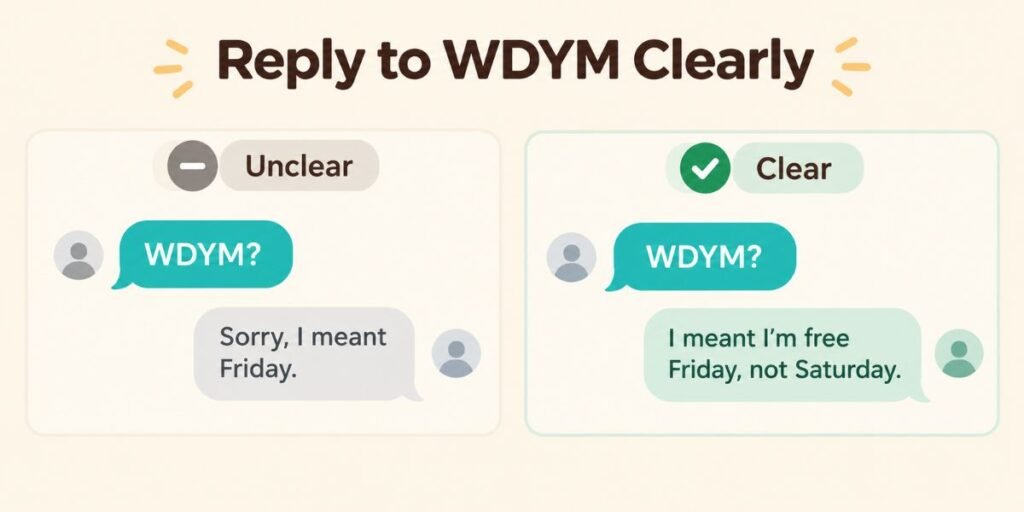
The best reply depends on whether your original message was clear. A few options:
- If you want to explain: “I meant I’m free Friday, not Saturday.”
- If your wording was unclear: “Sorry, that was unclear. I’m saying the project is on hold for now.”
- If the question feels confrontational and you want to ease the tension: “Nothing serious, I just wanted to make sure I understood you right.”
- If the topic is too big for a text: “Easier to explain in person. Are you free later?”
A short, direct answer usually works better than a defensive one. You don’t need to justify yourself at length. Restating the point clearly is enough in most cases.
Common Mistakes When Replying to WDYM
Some replies make a simple question more confusing. Watch out for these:
- Answering a different question than the one asked. If someone asks what you meant, repeating the original statement louder doesn’t help. Rephrase the idea in new words.
- Getting defensive. Responses like “I said what I said” invite a longer argument. A calm restatement works better.
- Sending a long explanation for a small question. If the answer is one sentence, keep it to one sentence.
- Replying with another WDYM. Asking the same question back can make the exchange feel like a standoff.
Most of these mistakes come from reading the abbreviation as a challenge. Treating it as a plain request for clarity usually makes the reply easier to write.
WDYM vs. WYM: What’s the Difference?
WYM is a shortened version of the same question, “what you mean?” Both are used to ask for clarification, and both are informal.
In practice, the two are generally interchangeable. WDYM reads as a complete question, while WYM feels more clipped. Some sources describe WYM as a less common form, so if you’re writing for a mixed audience or talking to someone unfamiliar with slang, WDYM is the more widely recognized choice.
WDYM vs. Other Texting Abbreviations
Several abbreviations look similar to WDYM, and mixing them up can change the whole meaning of a reply. The table below compares the most common ones.
WYD is the one people confuse most often with WDYM, and the difference is one letter. If a friend writes “WYD?” after you’ve just mentioned a plan, they want to know what you’re up to, not what you meant. WDYT is different because it asks for your view on something. WDTM is the least common of the four, and it’s useful when someone is asking about a specific word.
WYDM sometimes shows up in chats too. I couldn’t confirm a widely used meaning for it, so in most cases it looks like a typo or a variant of WDYM. If the surrounding message makes its intent unclear, asking the sender to spell out the question is the safest move.
WDYM in Roman Urdu and Hinglish Chats
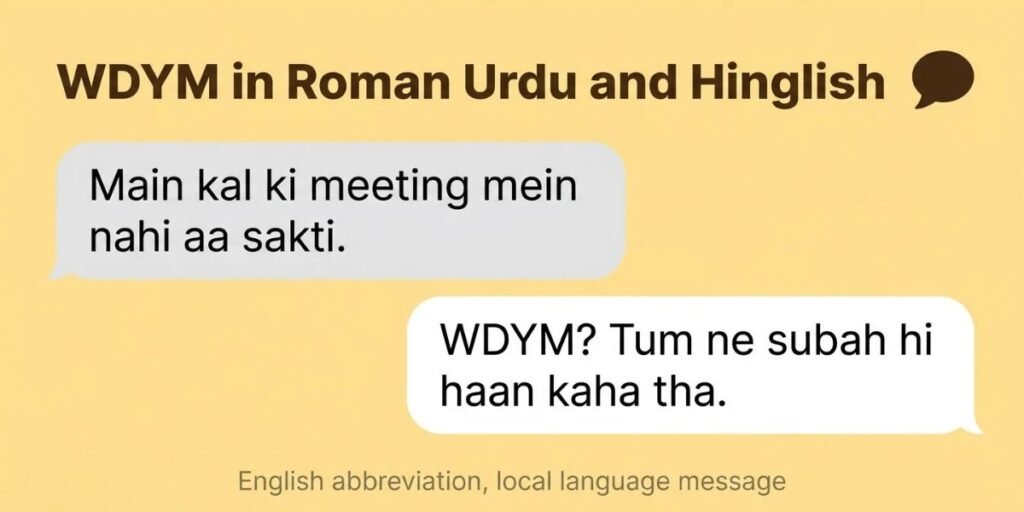
Many chats in Pakistan and India mix English with Roman Urdu or Hindi, and WDYM fits naturally into that style. The abbreviation stays in English, while the rest of the message is written in the local language. The English phrase itself doesn’t have a single fixed translation, because the wording depends on the relationship and the formality of the chat.
For example:
Areeba: Main kal ki meeting mein nahi aa sakti.
Hamza: WDYM? Tum ne subah hi haan kaha tha.
In English, Hamza is asking, “What do you mean? You said yes this morning.” The message stays casual, and the local phrasing comes across easily. People also write shorter versions like “WDYM, samajh nahi aaya,” which means “What do you mean, I didn’t understand.”
When you reply in a mixed-language chat, keep your answer in the same language style as the other person. If they wrote in Roman Urdu, a reply in English can feel distant, even when the content is clear.
Realistic WDYM Text Conversation Examples
Example 1: A hobby suggestion
Theo: You should try pottery. It’s basically therapy.
Lina: WDYM therapy? Like it calms you down?
Theo: Yeah, you just focus on the clay and forget everything else for an hour.
Example 2: A vague work update
Marcus: Things are going to change at the office next month.
Dana: WDYM change? Are we getting new managers?
Marcus: No, they’re moving the whole team to the third floor. Nothing major.
Example 3: A message that sounds serious
Priya: I don’t think I can keep doing this anymore.
Sam: WDYM? Are you okay?
Priya: I mean the group project. I’m burned out. Sorry for being dramatic.
The third example shows an important point. When a message sounds serious, a plain question works better than a short abbreviation. Asking directly what someone means and checking how they’re doing make it clear you care about the answer.
When Should You Use WDYM?
Use WDYM when you actually need clarification. It fits well in casual chats with friends, family, and coworkers you talk with informally. It also works in quick back-and-forth exchanges where both people already know each other’s style.
Shorthand like this is common in casual messaging, and the broader texting culture around it is explained in our TBH meaning guide, which covers another abbreviation people use to keep messages short.
In formal settings, such as professional emails, customer support messages, or official announcements, a full sentence is clearer. “Could you clarify what you meant by that?” communicates the same request without the risk of sounding dismissive. The same goes for conversations where the other person is upset, since a bare abbreviation can read as impatient.
Frequently Asked Questions
What does WDYM mean in text?
WDYM means “what do you mean?” In text, it asks the other person to explain something that seems unclear, surprising, or open to multiple interpretations.
Is WDYM the same as WYM?
In most cases, yes. Both ask for clarification. WDYM is the complete form, while WYM is shorter and more clipped.
Does WDYM mean something different on Snapchat?
No. The standard meaning is “what do you mean?” on Snapchat, as on other apps. Snapchat’s disappearing messages and short replies can make it feel more abrupt, but the definition doesn’t change.
Is WDYM rude?
Not by itself. The tone depends on punctuation, wording, and the relationship between the people involved. A friendly WDYM reads as curiosity, while a sharp one can sound challenging.
What does WDYM mean from a boy or a girl?
The meaning doesn’t change based on the sender’s gender. Any interest or teasing would come from the wider conversation, not from the abbreviation alone.
What’s the difference between WDYM and WYD?
WDYM asks what someone meant. WYD asks what someone is doing. The one-letter difference changes the question entirely, so “WYD tonight?” is about plans, not clarification.
Is WDYM the same as WDYT?
No. WDYM asks for clarification, while WDYT asks for your opinion. “WDYT?” usually follows a suggestion or idea you want feedback on.
How should I reply to WDYM?
Restate your point clearly and briefly. If your original message was unclear, apologize for the confusion and say what you meant.
Can WDYM be used in a work chat?
It can be, if the team is informal and you already know each other well. In formal or unfamiliar settings, writing out the full question is usually the safer choice.
Conclusion
WDYM is a short way of asking “what do you mean?” It’s most useful when a message is vague, surprising, or open to multiple interpretations. Its meaning stays the same on Snapchat, in texts, and in group chats, even though the tone can shift with wording, punctuation, and the people involved.
When you see WDYM, look at the whole exchange before deciding how it was meant. A clear, friendly reply usually clears up confusion quickly, and a full sentence is often the better choice when the moment feels serious or formal.

I am Emma Carter, a naming and branding writer at Namezel.
I help readers find business names, brand names, and creative name ideas across categories like gaming, baby names, and pet names.
My goal is simple: turn “what should I call this” into a name you’ll actually love.